
Services
Tethered Drone Services
To survey the land
Overview
A tethered drone system is a setup where a drone is connected to the ground by a physical tether, typically a strong cable that provides power and/or data transmission between the drone and a ground station. Unlike free-flying drones that rely on batteries, tethered drones have access to a continuous power supply from the ground, allowing for prolonged operation without the need to land and recharge.
Key Components
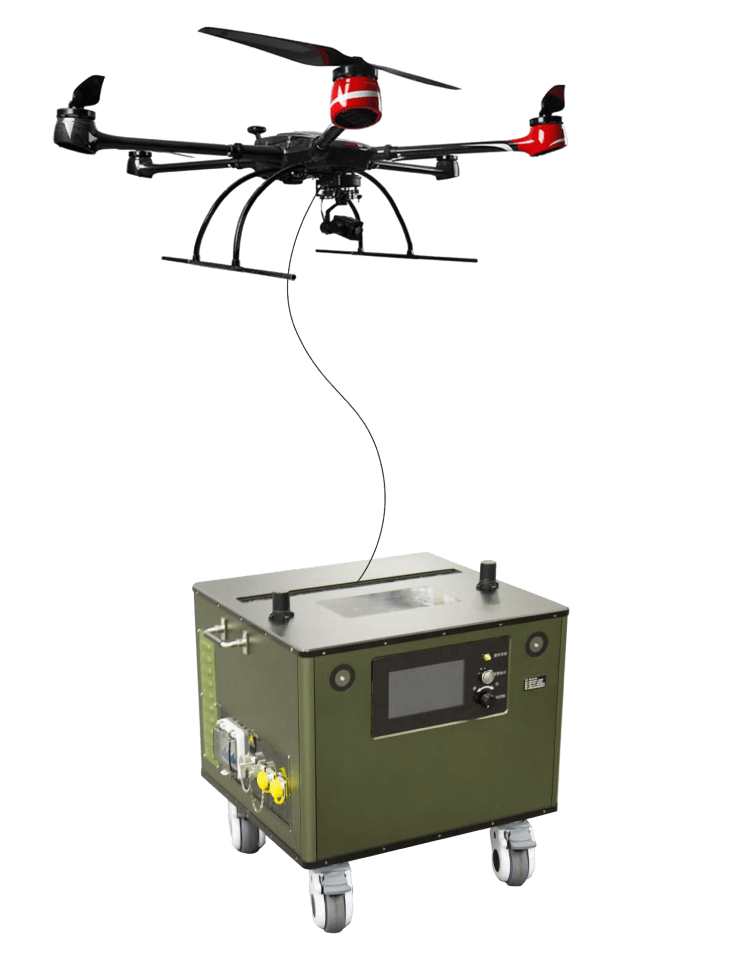
- Drones
- Equipped with cameras, sensors, or other payloads.
- Tether Cable
- A robust cable providing continuous power and often high-speed data connectivity.
- Ground Station
- Supplies power and receives data, usually with backup batteries, power generators, or other power supplies.
- Winch System
- Automatically manages tether length, retracting or extending it as needed based on the drone’s position.
Benefits of Tethered Drone Services
Extended Flight Time
Operates indefinitely as long as there's power from the ground.Stable and Secure Data Transmission
Often equipped with fiber optics or other data systems in the tether, allowing real-time, secure data transmission.Safer Operations
Reduces the risk of the drone drifting away or losing control due to low battery.High Wind Resistance
Due to the tether’s stabilizing effect, making it ideal for long-duration monitoring or communication in challenging environments.
Applications

Surveillance and Monitoring
Border control, event security, and infrastructure monitoring.
Communication Relays
Emergency communications in disaster areas, temporary network extensions, and military applications.
Industrial Inspections
High-stakes inspections of construction sites, energy plants, and other critical infrastructure.
Broadcast and Media
Capturing live events from elevated perspectives for extended periods.
In essence, tethered drones offer unique advantages for tasks requiring continuous secured operation and reliable data connectivity, which stands a unique advantage in our busy airspace typically within or near the airport boundary